


Measles Vaccine
Measles
Measles is a highly contagious viral illness marked by high fever and a widespread rash, sometimes accompanied by cough, runny nose, and red, watery eyes, caused by the measles virus. It is spread mainly through respiratory droplets released when an infected person coughs or sneezes, with humans acting as the only natural host. Outbreaks tend to occur in areas with low vaccination coverage, a situation that can arise in both low-income and high-income countries wherever immunisation rates fall below the level needed to prevent transmission. The level of risk to travellers varies considerably depending on local vaccination coverage and the presence of active outbreaks, though certain factors, such as being unvaccinated or only partially vaccinated, spending time in crowded public spaces, or travelling during a known outbreak, can raise the chances of infection. Those visiting areas experiencing active outbreaks, particularly if they are not fully vaccinated, face a greater risk of contracting measles.

Symptoms
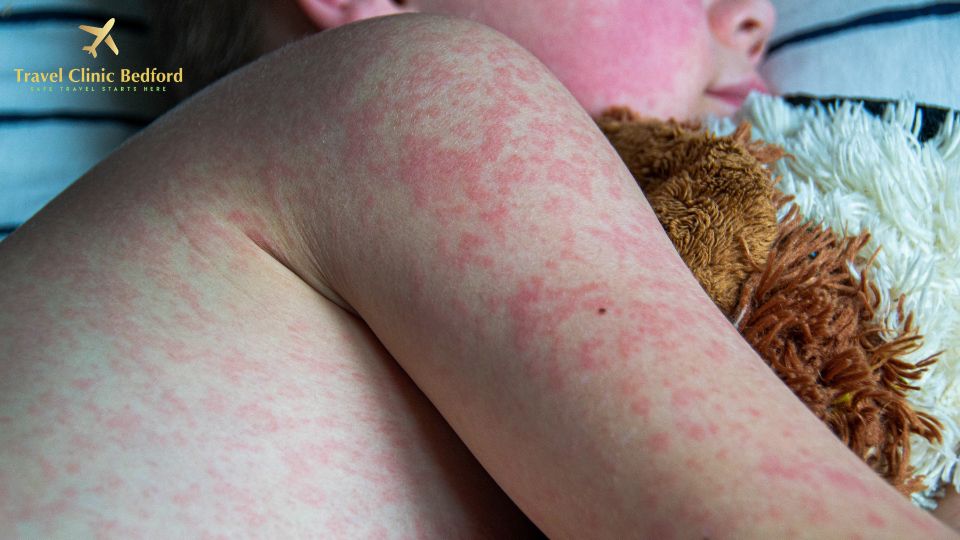
Measles typically develops gradually, usually starting with a high fever, cough, runny nose, and red, watery eyes, followed a few days later by a widespread rash that spreads across the body. In most cases the illness resolves within one to two weeks, though the fever and rash can be distressing while they last. Serious complications are relatively common compared with other childhood illnesses and can include ear infections, pneumonia, and, less often, swelling of the brain, particularly in young children, adults, and those with weakened immune systems. Deaths from measles are uncommon in well resourced healthcare settings but remain a significant cause of mortality in areas with limited access to medical care. It is also worth bearing in mind that measles is one of the most contagious diseases known, and infected individuals can pass it on to others before symptoms even appear. Recognising the symptoms of measles and seeking medical advice promptly is key to managing the illness and preventing further spread.
Vaccination
Preventing measles relies heavily on ensuring vaccination is up to date, as the MMR (measles, mumps, and rubella) vaccine offers strong protection against the disease. For those who may not have been vaccinated in childhood, or who are unsure of their vaccination status, catching up on missed doses before travelling is strongly advised, particularly for those heading to areas with active measles outbreaks. This vaccine helps protect against the measles virus and can offer added reassurance when travelling to affected regions or countries with lower vaccination coverage. It is recommended for most people, though it is not suitable for certain groups, including pregnant women and those with significantly weakened immune systems. The vaccine is typically given as two doses, usually spaced at least a month apart, making it a well established and highly effective preventative measure. For tailored advice, speak to a healthcare provider about whether you are fully protected against measles ahead of your travel plans.
Book Now
Book your appointment with us today to receive your Measles vaccine and other essential travel vaccinations. Let us help you travel with confidence and peace of mind.
